Twenty-fifth meeting, 7-10 June, 2016
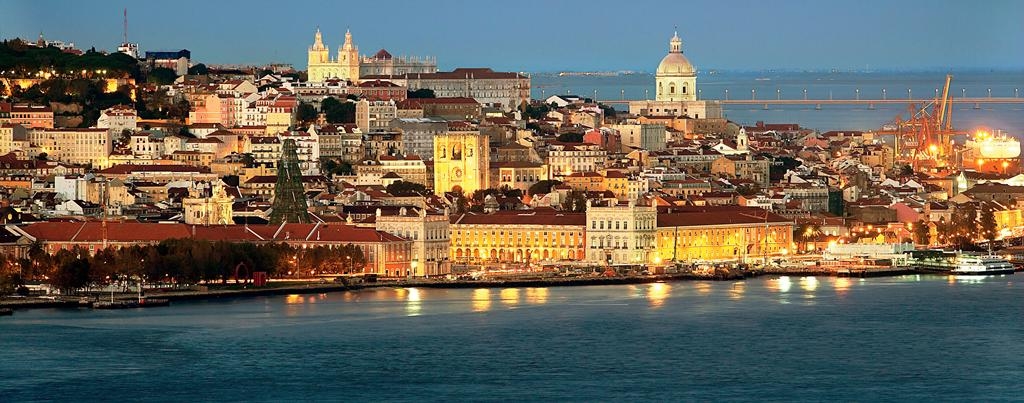
The PAGE 2016 meeting will be hosted by the University of Lisbon and will be held at the University of Lisbon, Portugal.

Our sponsors:

PAGE meetings take place in an informal atmosphere with vivid scientific discussion. The PAGE 2016 meeting will be held at the Aula Magna of the University of Lisbon Rectory (Alameda da Universidade, 1649-004 Lisboa; Google map link). The meeting will start with a welcome reception on Tuesday evening 7 June. The scientific programme will start on Wednesday morning 8 June and will end at noon on Friday 10 June. Participants are encouraged to attend all conference days and present their work in the form of an oral presentation or poster.
Abstracts and Apps
The program and abstracts can be downloaded as a single document (pdf) and experimental e-reader files in .ePub and .mobi format. Note that no printed abstracts are available at the conference so print them at home or use the special Apps that have been developed for iPhone and Android to view all abstracts off-line on your portable device.
Programme items:
- The Lewis Sheiner Student Session
The annual Lewis Sheiner Student Session was inaugurated, both to honour the memory of Lewis Sheiner and to highlight his lifetime passion for student education. Students who wish to be considered for this session should submit an extended abstract no later than 29 February 2016.- The abstract must be structured with the following subheadings: Objectives / Methods / Results / Conclusion / References.
- There must be at least 6,000 but not more than 7,000 characters (including spaces) in the abstract itself, i.e. excluding Title / Authors/ Affiliation and References.
- The submitted work must have been performed either as part of an MSc or PhD programme and/or will ultimately form part of a PhD thesis.
- Each year a rotating committee of three members, representative of the PAGE community, will judge who should receive the honour of presenting in the Lewis Sheiner Student Session.
- If selected, the student will automatically receive a 300 euro travel grant. A permanent list of students, with links to their presentation, will be maintained on the web site.
- The Stuart Beal Methodology Session
As a tribute to Stuart Beal, the organising committee has instituted the Stuart Beal Methodology Session. The organising committee will choose presenters from the submitted abstracts. - Tutorial on estimation methods in population modelling
- A series of tutorials on estimation methods will be arranged at PAGE over the upcoming years. This first year will deal with “Expectation-maximization (EM) methods” and will be given by Dr Robert Bauer from Icon Development Solutions.
- Special session on Immune response
- This session will be devoted to immune response to drug treatment (regarding both intended and unintended effects). Professor Nigel Klein from the University College London will give an introductory presentation with a biological perspective on immune response. Further presenters will be selected by the organising committee from the submitted abstracts.
- Special session on Growth modelling
- In this session Dr Shasha Jumbe introduces the Gates’ Healthy Birth, Growth & Development knowledge integration project, followed by a talk on the auxology methodology used in this specific project by Prof. Louise Ryan. Further presenters will be selected by the organising committee from the submitted abstracts.
Registration
- Registration is now open! Registration is only possible at the PAGE website.
- If you have previously registered at the PAGE website, your personal details (address etc.) are still available.
- If this is the first time you will attend PAGE, register first at the PAGE website before enrolling for the meeting.
Please keep our database up to date by editing your existing profile if required!
- If you’ve forgotten your password, a reminder can be requested automatically from the website by e-mail.
- If you’ve forgotten your password and changed your e-mail address then please contact Rik Schoemaker (rs@page-meeting.org).
- Updates of personal details in the website are confirmed automatically by email. Note that if you do not receive a confirmation, you should check that your e-mail address is correctly entered in the designated field.
Registration fees and payment
- Registration fees are:
- 625 € for participants from industry and commercial enterprises
- 425 € for academics (including post-doc students), non-profit participants, unemployed or retired professionals, and government employees
- 125 € for full time students in an MSc or PhD programme at the time of the PAGE meeting (and not otherwise employed) who do not submit and present a poster or oral communication abstract at PAGE 2016
- 25 € for full time students in an MSc or PhD programme at the time of the PAGE meeting (and not otherwise employed) who do submit and present a poster or oral communication abstract at PAGE 2016
- Fees include coffee, tea and lunch on all days, the welcome reception on 7 June and the social event on 9 June.
- Accompanying persons can attend the welcome reception and the social event for a fee of 125 €
- Participant places are limited and allocated on a first come, first serve basis.
- Registration fees must be paid at the PAGE website by credit card only (Visa, Maestro, MasterCard and American Express) within 14 days after registering at the PAGE website. Visa payments require Verified-by-Visa to be activated, and MasterCard requires SecureCode for your and our own security. Failure to meet this deadline will automatically place your registration on the waiting list.
- Students wishing to qualify for the student registration fee will need upload, at the time of registration, a scanned copy of a signed letter of support from their supervisor indicating that they will be full time students in an MSc or PhD programme at the time of the PAGE meeting (and not otherwise employed), and a scan of their current student card. If this information (and an abstract if applicable) is not available at the time of the abstract deadline (29 February), non-reduced fees will be charged.
Cancellation policy
No refunds will be given once the registration fee has been paid, not even in the extremely unlikely event that the meeting is cancelled due to force majeure. Substitution of delegates will be accepted at any time.
PAGE Student Sponsorship
A PAGE Student Sponsorship to support travel and accommodation expenses (kindly supported by Certara and BAST and Occams), is available to a very restricted number of students unable to obtain any other financial support. This will be judged on a case-by-case basis by a selection committee. Please see here to download a form with criteria and details on how to apply.
Abstract submission
Deadline for Lewis Sheiner Student Session abstracts: 29 FEBRUARY 2016
Deadline for regular abstracts: 29 FEBRUARY 2016
In contrast to previous years, the abstract submission deadline is the same for all abstracts: Lewis Sheiner Student Session abstracts, oral session abstracts, and poster abstracts and there will be no option for late submissions. The reason is that the PAGE organising committee intends to improve the quality of all abstracts, and that means that sufficient time is required for judging the abstracts. In particular, abstracts without results will be rejected. Statements such as “…will be shown…”, or “…will be available at the time of the conference…” are not acceptable.
- Please follow these instructions carefully regarding format and length of the abstracts or download them in either Word/RTF or Adobe/PDF format. Abstracts that do not comply with these guidelines will not be accepted.
- Each participant is only allowed to submit one poster abstract.
- Do not submit separate oral and poster abstracts: if your request for an oral presentation is not granted, you will be contacted to switch your abstract from an oral to a poster category.
- Submission of abstracts is only possible online through the PAGE website. Log in, click on ‘Register/submit abstract’ and click the link on the bottom of your personal info page.
- To facilitate the review of abstracts and to help structure the poster sessions, please select an abstract category when you submit your abstract.
- The abstract must be structured with the following headings: Objectives / Methods / Results / Conclusion / References.
- There is a strict limit of 1,000 to 2,500 characters (including spaces) for the abstract itself (i.e. excluding Title/ Authors/ Affiliation and References).
- When you click “Submit” you will immediately receive an email with your abstract attached. This e-mail will also be sent to the committee responsible for peer review in the selected category. Therefore, only click “Submit” when you have finished editing!
- Abstracts will remain invisible until release of the final programme (anticipated date: between 5 and 15 April).
Posters
The poster boards will accommodate an A0-size portrait poster (118.9 cm high and 84.1 cm wide/46.8 by 33.1 inches). Material for mounting your poster to the boards will be available on-site.
We have found a local supplier willing to print PAGE posters and the procedure is as follows:
- Prepare your poster as a pdf for printing on A0 PORTRAIT format (118.9 cm high and 84.1 cm wide/46.8 by 33.1 inches).
- Take a screenshot, or make a photograph or save as a small jpeg file so there is an image of your poster that can be used to check against the delivered full poster file.
- Send the poster file (pdf) and the picture to geral@theoriginaldesign.pt and clearly identify your poster using “PAGE2016 poster: Name, Email, PosterNumber”. The PosterNumber can be obtained from the list of abstracts and is given in front of the name of the presenting author.
- If the poster bounces because it is too large, resend the email without the poster file but with the picture file, and use WeTransfer at https://www.wetransfer.com/ to send the large poster file.
- The price is 20 euro per poster. Specify whether you want your poster printed on Vinyl matte or Vinyl glossy and if you want it packed in a plastic tube (10 euro extra).
- Wire the money, ensuring you pay all associated bank costs (do not use ‘share costs’) to:
- Desafios e Trajetorias
- IBAN PT50 0079 0000 6637 1602 1011 7
- BIC/SWIFT BPNPPTPL
- and clearly mark your wire transfer with “PAGE2016 poster: Name, Email, PosterNumber”.
- Send the poster file and wire the money before Thursday 2 June, 17:00 (5PM) local Portugal time.
- You will receive an email confirmation when the poster is printed.
- If you need your poster printed after 2 June, visit the shop at The Original Design, Avenida do Brasil N 24A, Alvalade, Lisboa from 09:00 (9AM) to 19:00 (7PM) local Portugal time, from Monday to Friday.
- Posters will be available for pickup at registration at the conference location (Aula Magna): you will need to mount them yourself.
Software demonstrations
Software companies, Academic Software Application Developers and Contract Research Organisations are welcome to present their products and services during PAGE. Please contact the conference secretariat for further details at elizabete.oliveira@tacongress.com.
Satellite meetings
Several events will be held before and after the PAGE meeting. If you are interested in organising such a satellite meeting, contact Top Atlântico DMC directly at elizabete.oliveira@tacongress.com. Please note that PAGE itself does not get involved in organising satellite workshops or booking venues, etc, and satellite meetings cannot be booked through the PAGE or local organisers web-site.
- Certara is running a one-day Parameter Estimation and Pharmacodynamics (PE/PD) hands-on workshop on Tuesday 7th June to provide an opportunity to become familiar with pharmacometrics features within Simcyp platform, which has been widely used by many groups for the purpose of PBPK modelling and simulation and in vitro-in vivo extrapolation, in particular recently as part of regulatory package. The population-based PBPK models can be connected to PD (pre- and/or user-defined) models, enabling concentrations at sites of action to drive pharmacological and toxicological effects and provide valuable insights in covariate recognition and dissecting PK and PD inter-individual variability. These PE/PD capabilities are available for both small and larger molecules and the features are continuously expanding. The course will be a bridge between mechanistic covariate recognition, complex model fitting and rational design of studies. Cost: Academics *£75.00 reimbursed on completion of course, Simcyp Consortium members £75.00, and Non Members £150.00. To register please click here or email Kelly on events@simcyp.com
- Certara is also running a one-day hands-on workshop on Bridging PBPK with POPPK for Paediatrics on Tuesday 7th June. The workshop covers predicting the age-related changes to pharmacokinetics and drug-drug interactions including associated variability and linking this information to drug response in the paediatric population. Examples of “how this informs the design of POPPK studies” will be presented during the course. The major topics covered are: Age-dependent physiological PK models for small molecules and large molecules; Prediction of drugs pharmacokinetics using IVIVE approach; Handling Age-varying covariates during simulation; Prediction of DDI in paediatrics; Linking PK variability to drug response in children; and Strategies for optimal study design using combination of PBPK and POPPK. Cost: Academics £75.00 reimbursed on completion of course, Simcyp Consortium members £75.00, Non Members £150.00. This workshop is now full, to be added to the waiting list please contact Kelly on simcyp.events@certara.com.
- Certara is also running a one-day workshop on physiological modelling of therapeutic proteins and antibody-drug conjugates on Tuesday 7th June. The workshop will combine lectures and hands-on sessions and focuses on the considerations needed to model the ADME and target binding properties of therapeutic proteins and antibody drug conjugates in a systems pharmacology context, using minimal and full PBPK models. The major topics covered are: Physiological models of protein (subcutaneous) absorption and distribution; Clearance mechanisms of therapeutic proteins; Considerations for constructing physiological models of Antibody Drug Conjugates; Modelling of target mediated drug disposition (TMDD) of protein and ADCs including techniques to account for target shedding. Cost: Academics *£75.00 reimbursed on completion of course, Simcyp Consortium members £75.00, and Non Members £150.00. To register please click here or email Kelly on events@simcyp.com
- Certara is finally offering a two day Advanced Level Workshop on Pharmacokinetics (6-7 June). This course is designed to explore advanced techniques in pharmacokinetic and pharmacodynamics modelling and simulation that are directly applicable to current challenges in drug development. In depth theory is coupled with examples from current literature to provide a complete training experience. Topics include complicated population pharmacokinetic models, PK/PD modelling of oncology studies, modelling transit compartments, target mediated drug disposition, and extrapolation from adults to children. The fee is 1000 US dollars and includes training materials, tea, coffee and lunch. All travel, accommodation and evening meal expenses are the responsibility of the attendee. All attendees are required to provide their own laptop with a computer mouse for use during the course. A temporary version of the software will be provided in a downloadable format to those attendees who need it approximately two weeks prior to the course. To reserve your seat, simply email Jaime.Fowler-Puerschner@Certara.com.
- ICON will present a one-day NONMEM 7 course on Monday 6 June. Workshop attendees will be instructed how to specify gradient precision for the improved FOCE algorithm, how to use Monte Carlo importance sampling, stochastic approximation E-M methods, and full Bayesian methods. Parallel computing and dynamic memory allocation for efficient memory usage will also be described as well as new features of NONMEM 7.3. The features of PDx-POP 5.1, the graphical interface for NONMEM 7, will also be demonstrated. Cost will be $500 for industry, $250 for academia, and $100 for students. For details and registration use this link, and the program can be found here or contact IDSSoftware@iconplc.com for more information.
- Lixoft is running a 2 day workshop on the Monolix Suite, given by Marc Lavielle on the 6th and 7th of June. The course is designed for both beginners and advanced modellers. Attendants can choose to attend either both days, Day 1 only or Day 2 only. Day 1 will provide a complete presentation of how to use Monolix for modelling, population analysis and parameter estimation. It covers basic and standard PKPD modelling as well as advanced modelling features. Day 2 will provide training on Simulx, a new clinical trial simulator for the simulation and visualization of longitudinal data and virtual patient populations. Simulx is now available as a standalone user-friendly, graphical application, and can also be used within R as a powerful simulation R package thanks to its combination with mlxR, a DDMoRe-sponsored library developed by Inria which contains several R functions for advanced clinical trial simulations. Finally the course will present complete workflows for modelling, exploration and simulation with the full Monolix Suite (Monolix, Mlxplore, Simulx). Click here for more information and registration.
- Uppsala Pharmacometrics will give a 2.5-day course on Advanced methods for population model building and evaluation in NONMEM for intermediate and advanced users from the 5th of June until 7th of June. The course presents model building and evaluation strategies, techniques and implementations in population models. The course will consist of both lectures and hands-on computer exercises using NONMEM 7, PsN and Xpose 4. Click here for more details and information on registration.
- DDMoRe will present a one day workshop on the 7th of June entitled “Get inspired … get started … get into the world of DDMoRe“. This workshop will consist of presentations and hands-on session with DDMoRe products. Program of the workshop is available via this link. Please register here if you wish to participate. For further question please contact Wendy Aartsen w.aartsen@hands4grants.eu.
- A one day workshop on Modeling Delays in Pharmacokinetics and Pharmacodynamics will be presented on Tuesday 7th of June 2016. The course will provide an overview of biological systems exhibiting delays, concepts of lifespan driven pharmacodynamic response, modeling of cell maturation, and nonlinear mixed effect lifespan models. Delay differential equations (DDEs) will be introduced and implemented in Monolix and Simulx. The course will consist of both lectures and hands-on computer exercises. Source codes for DDE based PK/PD models and data will be provided to the participants. Preliminary details about agenda and registration can be obtained here. Contact wk@buffalo.edu for more information.
- Bayer offers a free-of-charge Systems Pharmacology/PBPK workshop utilizing their SB Suite with PK-Sim and MoBi on Monday, June 6th. The one-day workshop will be a mix of theory and hands-on, so that attendees will get a useful mix of theoretical knowledge and practical experience. Focus will be laid upon on several real-life use cases dealing with physiologically based modeling of intrinsic and extrinsic factors influencing pharmacokinetics and translating between populations. Additionally, workshop attendees will learn how to utilize PK-Sim and MoBi’s newly implemented automatic tracking and documentation functionalities for better overview and transparency. A detailed workshop description can be found here (link), where registration is also possible. In case you have questions, please direct them to info@systems-biology.com.
- Metrum Research Group will present a half-day workshop entitled “Getting Started with Bayesian PKPD Modeling Using Stan: Practical use of Stan and R for PKPD applications” on Friday 10 June, 14:00-18:00. We will demonstrate the use of Stan (http://mc-stan.org/) and the R package rstan for Bayesian PKPD modeling. Stan is a flexible open-source software tool for Bayesian data analysis using Hamiltonian Monte Carlo (HMC) simulation—a type of MCMC simulation. Via the examples you will see how to implement nonlinear regression models, nonlinear mixed effects models and additional programming required for population PKPD models. The latter includes learning how to deal with dosing and observation event schedules specified using NONMEM conventions. Models requiring numerical solution of differential equations will also be demonstrated. We will discuss the pros and cons of Stan relative to other tools. Cost will be $300 for industry, $100 for academia or students. Click here for details and registration.
- MD Pharmacon Pharmaceutical Services Ltd and the Portuguese Society for Pharmaceutical Sciences organize a one-day (June 6, 2016) meeting on SCIENTIFIC AND REGULATORY ISSUES IN DRUG DEVELOPMENT AND BIOEQUIVALENCE (ivivc, bcs, bddcs, biowaiver, paediatric, statistics, modeling and simulation). The subjects addressed by the speakers are of utmost importance to those working in the biopharmaceutics of innovator as well as generic drug development and applications. This one-day meeting is intended for academics/students or scientists working in academia, pharmaceutical industries, regulatory agencies, and contract research organizations. Click here for details and registration.
- The Center for Translational Medicine at the University of Maryland School of Pharmacy is proud to announce a new workshop event at PAGE 2016, “Modern R” on Monday and Tuesday (June 5th and 6th) at the VIP Grand Lisboa. This is an intermediate level workshop that focuses on building and enhancing skills for rapid data preparation, analysis and visualization using both base R as well as packages such as dplyr, ggplot2, tidyr, purrr, broom and PKPDmisc. Whether your workflow involves handling data processing, managing modeling projects, preparing publication-quality visualizations reports, performing simulations or statistical analyses, we guarantee you will learn techniques to greatly speed up how you tackle problems you face. You can learn more at http://www.learnr.me or directly view the sign up page at eventbrite. The workshop features a combination of focused lectures, hands-on material, and real-world larger scale projects that build on lessons throughout the day. Examples are provided at http://www.learnr.me and an in-depth breakdown of material is provided on the registration page.
Satellite Symposia
- PKPD modelling of QT interval – Regulatory perspective and impact of ongoing revision of ICH S7B and E14 guidelines Date: 07 June 2016, from 13:30 – 17:00. Venue: Faculty of Pharmacy, University of Lisbon. Regulatory agencies, academic researchers and pharmaceutical companies appear to have recognised the drawbacks of the existing approach for the evaluation of pro-arrhythmic properties based on a predominant focus on the hERG channel. As a result, at the conference of the Cardiac Safety Research Consortium (CSRC)-Health and Environmental Sciences Institute (HESI)-Food and Drug Administration (FDA) held in July 2013, a revision of ICH S7B and possible elimination of ICH-E14 was proposed. Of note is the shift from evaluating QT prolongation to evaluating pro-arrhythmic activity using a comprehensive in vitro pro-arrhythmia assay (CiPA). This satellite symposium will be an opportunity to discuss the role of PKPD modelling and clinical trial simulations to characterise pro-arrhythmic risk and QT interval prolongation. Details of the final programme will be released soon. Participation will be free of charge, but registration is required due to limited venue capacity. Registration is now open through this link and the final program can be downloaded here. For further information contact: Salvatore D’Agate (s.d’agate@ucl.ac.uk).
- Do you have an interest in ensuring children and young people survive and thrive to their full potential; – to empower the poorest, transform lives (especially women and girls); – to combat diseases that particularly affect the poorest? Are you inspired to take action to impact and change the world using the pharmacometric approach?
Guided by the belief that all lives have equal value, the Bill & Melinda Gates Foundation pride ourselves in being ‘impatient optimists’ whose purpose is to address inequity. Our vision is to ensure a world where every person has the opportunity to live a healthy, productive life. Our currency through data, discovery and decisions is data science and technology.
Come learn how we are applying the pharmacometric approach to tough Global Health problems